
The biggest problem facing Nigeria’s children is not that adults don’t care about them but too many adults are trying to raise 21st-century children with yesterday’s tools.
That is the issue behind the Train The Trainers Summit (TTTS) intervention.
And it is why calling TTTS simply “an event” misses the point.
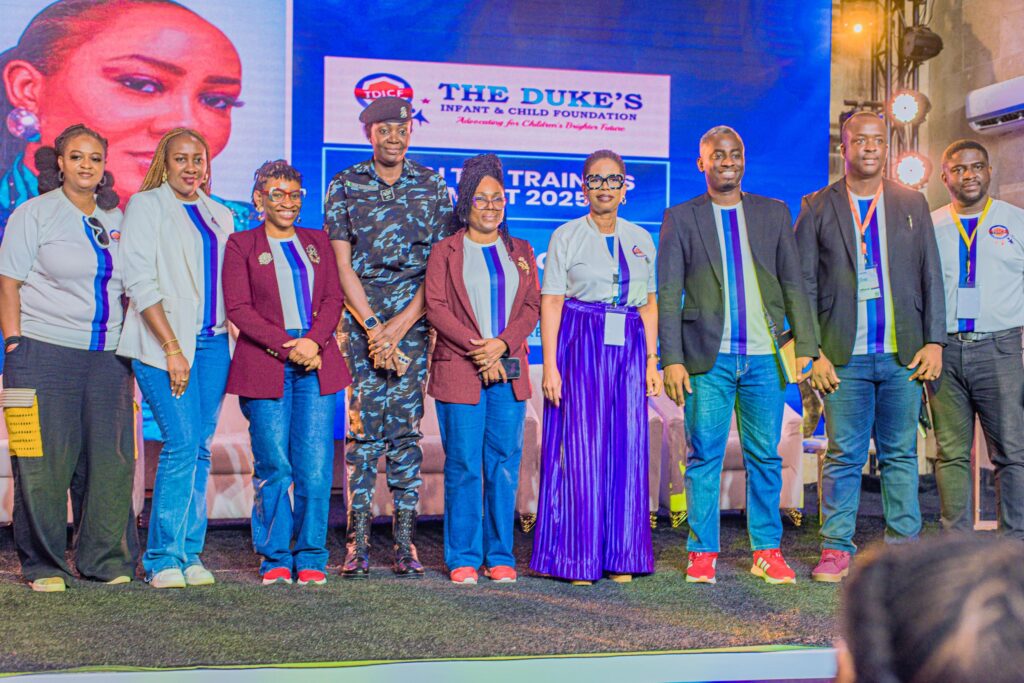
TTTS was created by The Duke’s Infant & Child Foundation (TDICF) as a national capacity-building intervention designed to strengthen the people, institutions and communities surrounding children.
Because children don’t grow up in isolation.
They grow up at home.
They learn in schools.
They are influenced by churches, mosques and communities.
They interact with technology and social media.
They are shaped by teachers, parents, caregivers, mentors, peers and community leaders.
So, if we want better outcomes for children, we must equip the ecosystem around them.
That is where TTTS comes in.
SO, IS TTTS AN EVENT?
No.
The Summit is the delivery model.
The intervention is much bigger.
TTTS brings Subject Matter Experts from different areas affecting childhood into one coordinated learning experience instead of treating every problem as though it exists independently.
Child safeguarding.
Parenting.
Education.
Drug abuse.
Digital safety.
Emotional intelligence.
Values.
Leadership.
Community transformation.
These are not separate realities in a child’s life.
They intersect every day.
A child struggling emotionally may also be struggling academically.
A child experiencing digital exposure may also be experiencing peer pressure.
A teacher dealing with difficult behaviour may actually be responding to an emotional or safeguarding issue.
A parent may be trying to discipline a child without understanding the world that child is growing up in.
The problems are connected. The response must be connected too.
THE REAL PROBLEM: ADULTS CARE, BUT MANY NEED NEW TOOLS
Across the communities TTTS has reached, one thing has become increasingly clear:
The challenge is not that adults do not care.
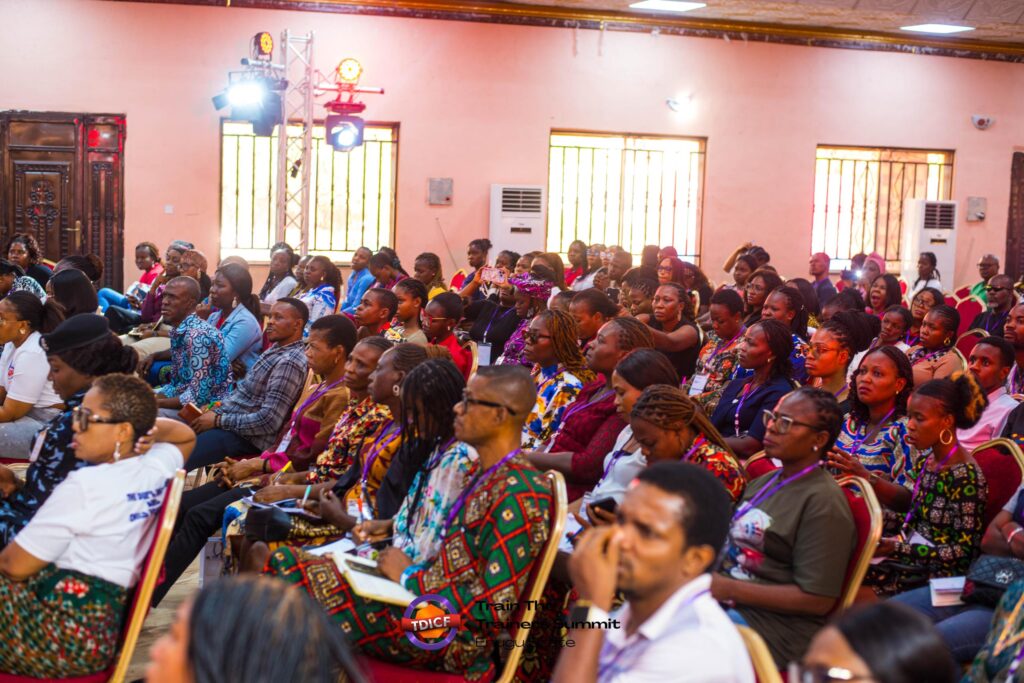
The challenge is that many adults are caring for children in a rapidly changing world without enough practical knowledge, tools, coordination or support.
Children today are growing up with realities that previous generations did not have to navigate in the same way.
Screens are everywhere.
Digital content can enter a child’s life before an adult even knows it.
Teachers are dealing with changing emotional and behavioural patterns.
Parents are navigating new forms of peer pressure and exposure.
Caregivers need to understand safeguarding.
Communities need practical ways to participate in raising children.
The TTTS Southern Nigeria report captures this challenge simply: many adults are concerned about children, but not enough adults are equipped to respond to the new realities children face.
And that is the gap TTTS is designed to close.
WHY TRAIN THE ADULTS?
This is one of the most important questions TTTS answers.
Why not simply go directly to children?
Because the adults around children determine much of the environment in which children develop.
Train a teacher, and that knowledge can influence an entire classroom.
Train a parent, and it can change what happens inside a home.
Train a school leader, and it can influence an entire institution.
Train a community leader, and the knowledge can travel through a community.
That is why TTTS was deliberately designed for multiplication, not attendance.
ENTER THE COMMUNITY CHAIN REACTION
This is where TTTS becomes very different from a conventional convergence.
A person does not attend TTTS simply to collect a certificate and move on.
Participants are trained and activated as multipliers through the Community Chain Reaction (CCR).
The principle is straightforward:
Learn it.
Use it.
Teach it.
Multiply it.
Each certified trainer is expected to take what they learn into their schools, families, organisations and communities, with the model projecting each certified trainer to train 50 more people.
So the real question after a Summit is not:
“How many people attended?”
It is:
“How far did the knowledge travel?”
That is the difference between an event and an intervention.
TTTS began as a Delta-born intervention.
The first full edition was flagged off in Asaba and Warri, Delta State, on 15–16 November 2025.
From there, demand from other communities drove expansion.
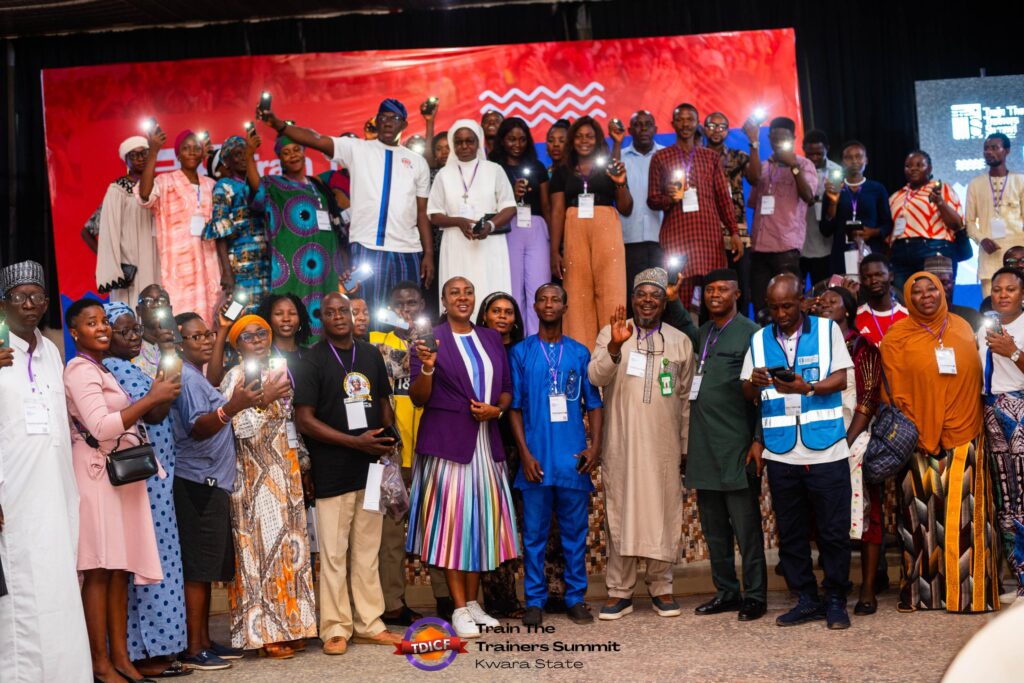
The Southern execution has now covered 17 states and 18 locations, spanning the South East, South South, South West and a strategic extension to Kwara.
The documented TTTS footprint includes Delta, Anambra, Ebonyi, Enugu, Akwa Ibom, Rivers, Cross River, Kwara, Imo, Abia, Edo, Bayelsa, Ogun, Osun, Oyo, Ekiti and Ondo.
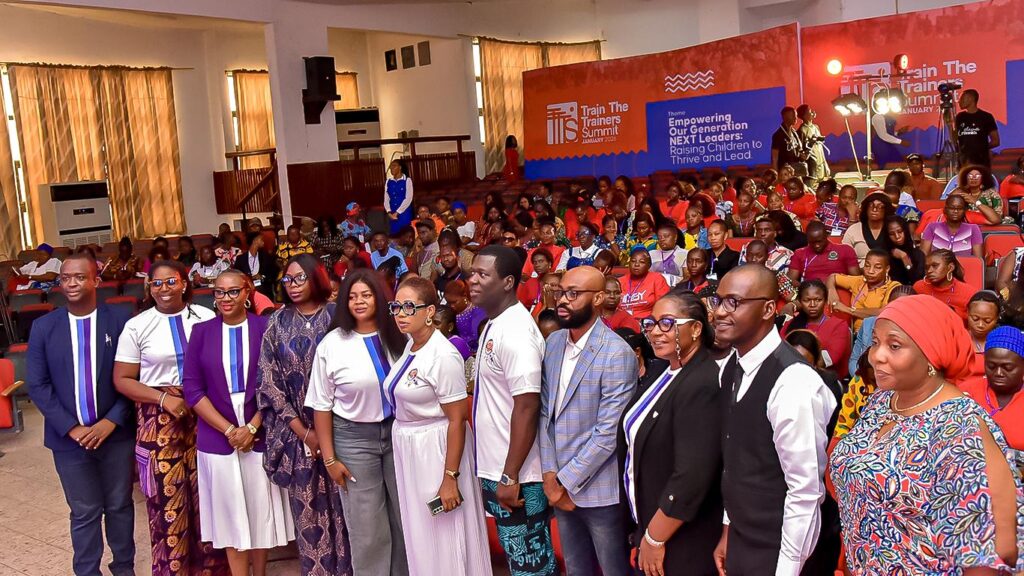
The model has already reached more than 13,000 trainers and youth leaders across those 17 states and 18 locations.
That matters.
Because TTTS is no longer simply an idea written in a proposal.
It has been tested in real communities.
WHAT ACTUALLY HAPPENS AT TTTS?
This is not a day of endless speeches.
The delivery model includes:
KEYNOTE SESSIONS
To frame the bigger conversation around children, education and development.
BITE-SIZE MASTERCLASSES BY SUBJECT MATTER EXPERTS
Short, practical sessions focused on specific challenges facing children and families.
INTERACTIVE WORKSHOPS
Designed to move participants from simply hearing information to thinking about how to apply it.
CERTIFICATION
Participants receive digital certification upon verification.
STAKEHOLDER ENGAGEMENT
The model deliberately engages education leaders, government offices, community leaders and partners.
MEDIA DOCUMENTATION
The work is documented so the conversation can extend beyond the physical room.
In other words:
TTTS is designed for learning, application, multiplication and continuity.
WHAT DOES TTTS ACTUALLY TEACH?
The learning is deliberately broad because childhood itself is broad.
Participants engage with areas including:
- Intentional parenting
- Teacher empowerment
- Child protection and safeguarding
- Digital safety
- Emotional intelligence
- Values and leadership
- Community transformation
The goal is not to make every adult an expert in everything.
It is to make the adults surrounding children more informed, more prepared and better connected to the realities children face.
AND YES, INCLUSION MATTERS
A movement for children cannot afford to leave some children behind.
The TTTS model deliberately considers inclusion.
In the Delta model, provision was made for persons with disabilities in the hall arrangement and physical setup, even though an interpreter was not required for that particular physical edition because no deaf participants attended. The Delta First Lady’s speech didn’t leave them out either. In some States like Abia and Kwara, we intentionally carried them along.
In subsequent locations where deaf participants attended, interpreter support was provided.
And going forward, the ambition is to strengthen accessibility further including consideration for participants joining online so that the physical or digital format does not unnecessarily become a barrier to participation.
This is important because inclusion should not be something we remember after people arrive.
It should be part of how we design the room and the experience from the beginning.
The TTTS documentation also records disability-focused education and advocacy, physical accessibility considerations and interpreter provision where needed.
BUT TTTS DOESN’T STOP WITH TRAINING
This may be one of the most important things people misunderstand about TTTS.
The ambition is not to travel around Nigeria, large gatherings and declare victory.
The Summit is being used as a scale mechanism.
The proposed national model is built around six zonal editions representing all 36 states and the FCT within an 18-month period.
The projected first phase is:
6,000 certified trainers
↓
300,000 additional people reached through the Community Chain Reaction
↓
An estimated 3 million children reached
And alongside this, the model includes youth trainers, state Champion networks, institutional partnerships, policy engagement and the Generation NEXT platform.
That is why the ambition is bigger than “more Summits.”
It is about building infrastructure for continuous multiplication.
WHAT DOES GOVERNMENT HAVE TO DO WITH TTTS?
A lot.
Because if the same challenges keep appearing across communities, we cannot rely forever on individual projects to solve them.
TTTS therefore incorporates policy engagement into the model itself.
The strategy includes engagement with Ministries of Education, NOA, SUBEB and NAPPS, with the longer-term goal of encouraging the integration of relevant training into teacher and caregiver professional-development structures.
The proposed national initiative also includes a National TTTS Policy Communique and continued advocacy toward state and national recognition.
Because the ultimate goal is not simply:
“We trained some people.”
It is:
“We helped strengthen the systems that keep equipping the people responsible for children.”
AND THEN THERE IS GENERATION NEXT
The conversation cannot end when participants leave the Summit hall.
That is why Generation NEXT is designed as a companion platform running alongside the wider initiative.
It will create space for teachers, parents, school owners, youth leaders, government officials and education researchers to discuss the state of education and the realities shaping Nigerian children.
Because building the next generation requires more than training rooms.
It requires an ongoing national conversation.
SO WHAT IS TTTS REALLY TRYING TO BUILD?
A conference?
No.
A training programme?
Not exactly.
A national network of adults equipped to raise, teach, protect and guide children?
Yes.
That is the bigger picture.
TTTS combines:
EXPERTISE — bringing multiple disciplines into one coordinated intervention.
CAPACITY — giving adults practical knowledge and tools.
MULTIPLICATION — using the Community Chain Reaction to carry learning outward.
INCLUSION — deliberately considering underserved communities and persons with disabilities.
POLICY — engaging institutions that influence education and child development.
YOUTH — creating space for young people to become positive influencers and peer leaders.
CONTINUITY — using Champion networks and Generation NEXT to keep the conversation alive.
That is why the phrase “movement” is increasingly appropriate.
The Southern Nigeria report describes TTTS as a movement of awakening, equipping and transformation, rather than merely an event.
THE QUESTION NIGERIA SHOULD REALLY BE ASKING
We often ask:
“What kind of country will our children inherit?”
But there is another question we must ask:
“What kind of adults are we preparing to shape the children who will inherit it?”
Because the future is not being built only in government offices.
It is being built in classrooms.
In homes.
In communities.
In places of worship.
On phones and screens.
In conversations between parents and children.
In the way teachers correct.
In the way caregivers protect.
In the values we model.
And in whether the adults responsible for children are prepared for the world those children are already living in.
The TTTS report puts it powerfully: the future of Nigeria is being shaped now, in homes, classrooms, communities, phones, conversations, discipline, values and in the hands of the adults around children.
TTTS IN THREE SENTENCES
TTTS is the solution.
The Community Chain Reaction is the multiplier.
The States/Zonal model is the scale mechanism.
And the bigger destination?
A stronger national ecosystem of adults capable of continuously improving the environments in which Nigeria’s children grow, learn, thrive and lead.
This is why TTTS is about filling communities with better-equipped adults its about measuring what changes because people were trained and how far that change travels.
Its about building the capacity to raise the next generation differently.
TRAIN THE TRAINERS.
SAVE THE CHILDREN.
SECURE THE FUTURE.
Train The Trainers Summit (TTTS)
Powered by The Duke’s Infant & Child Foundation (TDICF).
