
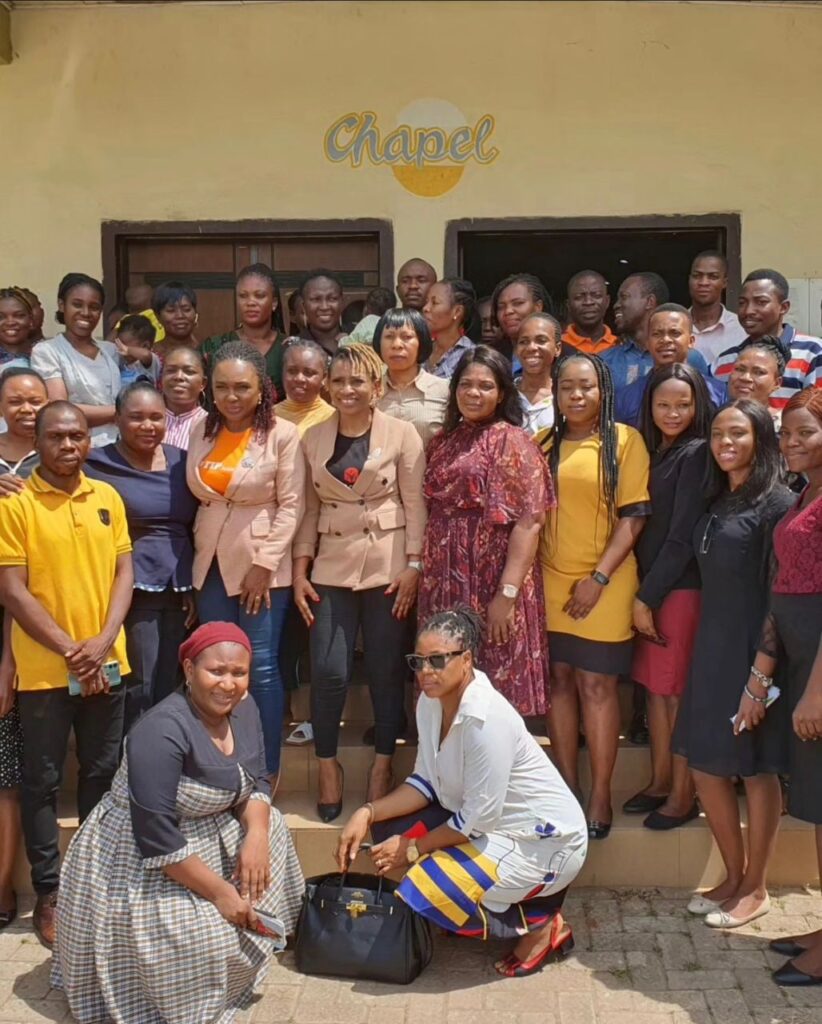
Today, thousands know The Duke’s Infant & Child Foundation (TDICF) through the transformative impact of the Train The Trainers Summit (TTTS), a movement that has equipped educators, parents, school owners, faith leaders, caregivers, and community influencers across Nigeria to better shape the lives of children.
Many have witnessed the packed halls, the national conversations, the expert-led sessions, and the growing momentum behind the movement.
What many do not know is this:
The work began long before the summit.
Long before the banners.
Long before the national tours.
Long before the stages, media coverage, and expanding partnerships.
TDICF had already committed itself to one of the most important assignments of our time:
Building a balanced ecosystem around every child.
Because long before we trained trainers publicly, we were nurturing trainers privately.
Long before we launched a national movement, we were shaping homes, supporting parents, mentoring caregivers, partnering educators, advocating for vulnerable children, and investing in the invisible systems that determine whether a child thrives or struggles.
TTTS did not create the vision.
It simply gave a national platform to a mission that had already been quietly transforming lives.
Understanding a Powerful Truth: Children Do Not Grow in Isolation
One of the greatest misconceptions in child development is the belief that children succeed solely because of individual talent. Research, experience, and observation consistently reveal a different reality. A child’s future is shaped by an ecosystem.
Parents.
Teachers.
Caregivers.
Faith leaders.
Community influences.
Learning environments.
Digital exposure.
Emotional experiences.
Social relationships.
Every child grows within a network of influences that either accelerates or limits their potential.
At TDICF, this understanding became foundational.
Rather than focusing only on children, we chose to focus on the people and systems surrounding them.
Because when you strengthen the ecosystem, you strengthen the child.
When you empower the influencers, you multiply the impact.
When you train the trainers, you transform generations.
This philosophy became the seed from which TTTS would eventually emerge.
Before TTTS, There Was the Ecosystem
Years before national conversations around intentional parenting became mainstream, TDICF was already championing a holistic model of child development.
We understood that academic achievement alone could not prepare children for the complexities of the future.
The next generation would require more than knowledge.
They would need resilience.
Character.
Emotional intelligence.
Critical thinking.
Digital awareness.
Leadership capacity.
Purpose.
And these qualities are cultivated not only in classrooms, but across the entire ecosystem surrounding a child.
This understanding drove TDICF’s commitment to programs and partnerships designed to strengthen families, educators, and communities.
It informed our advocacy efforts.
It shaped our interventions.
It influenced our collaborations with educational experts and child development practitioners.
Most importantly, it reinforced our belief that raising successful children requires intentional communities.
Every Child Learns Differently, And Every Child Deserves to Be Understood
A major pillar of TDICF’s ecosystem approach has been advancing conversations around learning styles, childhood pedagogy, and intentional parenting.
For too long, education systems around the world have often relied on standardized approaches that assume children learn in similar ways.
But children are wonderfully different.
Some learn best by seeing.
Others by hearing.
Others through movement, experimentation, and physical engagement.
Some process information quickly.
Others require reflection and repetition.
Neither is inferior.
They are simply different.
Recognizing and respecting these differences can dramatically alter a child’s educational journey.
Through collaborations with educational thought leaders and platforms such as The Intentional Parent Academy, TDICF has consistently promoted awareness around personalized learning approaches that help parents and educators identify and nurture the unique strengths of each child.
The goal has never been to force children into rigid systems.
The goal has always been to create systems that allow children to flourish.
Building Homes That Heal and Develop
The ecosystem around a child extends far beyond school walls.
In many ways, the home remains the most influential learning environment a child will ever experience.
Children absorb far more than academic lessons at home.
They learn emotional regulation.
Communication.
Values.
Confidence.
Identity.
Problem-solving.
Belonging.
For this reason, TDICF has continually emphasized the importance of intentional parenting and healthy home environments.
A child’s room.
A family’s communication culture.
The presence or absence of encouragement.
The balance between discipline and affection.
The management of digital exposure.
All these factors contribute significantly to developmental outcomes.
Creating a balanced ecosystem means helping families understand that learning is not an event that occurs only in classrooms.
It is a continuous process shaped by everyday interactions.
When homes become environments of encouragement, structure, curiosity, and emotional safety, children develop the confidence needed to navigate an increasingly complex world.
Why Emotional Resilience Matters More Than Ever

Today’s children are growing up in a world unlike any previous generation.
They face unprecedented access to information.
Unfiltered digital influences.
Social pressures.
Mental health challenges.
Rapid technological change.
And a future that is evolving faster than traditional institutions can adapt.
In such a world, academic excellence alone is insufficient. Children must also develop emotional resilience. The ability to recover from setbacks. The courage to attempt difficult tasks. The confidence to embrace challenges. The wisdom to learn from failure. The capacity to remain grounded amid uncertainty. These competencies do not emerge automatically. They must be intentionally cultivated.
For years, TDICF has advocated for approaches that balance structure with autonomy, helping children discover their strengths while developing the resilience required to overcome their weaknesses.
This balanced approach remains central to our philosophy today.
The Birth of a National Movement
As TDICF’s work expanded, a clear realization emerged.
The challenges facing children could not be solved by isolated interventions alone.
The scale of the need required a larger movement.
A platform capable of reaching not just individual families, but entire communities.
A mechanism for multiplying impact across regions and generations.
That realization gave birth to the Train The Trainers Summit.
TTTS was never designed as a conference.
It was designed as an ecosystem intervention.
A national platform to equip the adults who shape children every day.
Teachers.
Parents.
School administrators.
Faith leaders.
Mentors.
Caregivers.
Community influencers.
By empowering these critical stakeholders, TDICF created a multiplier effect capable of reaching millions of children indirectly through the adults responsible for their growth and development.
The summit simply scaled what the Foundation had already been doing for years.
From Familiar Corners to a National Stage
What began in homes, schools, communities, and mentoring spaces eventually evolved into a movement spanning states, regions, and thousands of participants.
The philosophy remained unchanged.
Only the reach expanded.
The same commitment to intentional parenting.
The same belief in holistic child development.
The same dedication to strengthening the ecosystem around every child.
The same passion for raising a generation capable of thriving and leading.
Today, TTTS continues to carry that vision across Nigeria, creating conversations that are reshaping how communities think about child development, education, leadership, digital safety, emotional intelligence, and future readiness.
What was once a quiet commitment has become a national movement.
What began in familiar corners now echoes across regions.
A Model for the Future
As governments, development agencies, educational institutions, and global organizations search for sustainable solutions to the challenges facing children and young people, one lesson is becoming increasingly clear:
The future of child development lies in ecosystem thinking.
No single institution can raise a child.
No single intervention can prepare a generation.
Sustainable transformation requires coordinated support systems that nurture the whole child while empowering the adults responsible for their growth.
This is the philosophy that has guided TDICF from the beginning.
It is why our work has always extended beyond charity into capacity building.
Beyond intervention into transformation.
Beyond programs into systems change.
And beyond children alone into the ecosystems that shape them.
The Journey Continues
The Train The Trainers Summit may be the most visible expression of TDICF’s mission today, but it is not the beginning of the story.
It is the continuation of a vision that has always believed in children.
A vision that understood the power of intentional parenting long before it became a trend.
A vision that recognized the importance of learning styles before personalization became a global educational conversation.
A vision that saw the necessity of ecosystem building before many understood its significance.
And a vision that remains committed to one enduring goal:
To build an Awesome World by raising empowered children, strengthening the adults who influence them, and creating balanced ecosystems where every child has the opportunity not merely to survive, but to thrive, lead, and shape the future.
Because before the movement had a name, the mission already had a heartbeat. And that heartbeat continues to echo through every child, every family, every educator, and every community touched by The Duke’s Infant & Child Foundation.